
Sullivan’s Island · History & Culture
Sullivan’s Island History & Culture
Sullivan’s Island is small enough to cross in minutes, but its history spans colonial quarantine, the transatlantic slave trade, the American Revolution, the Civil War, two centuries of harbor defense, Edgar Allan Poe, beach-resort life and the preservation of a distinctive Lowcountry town.
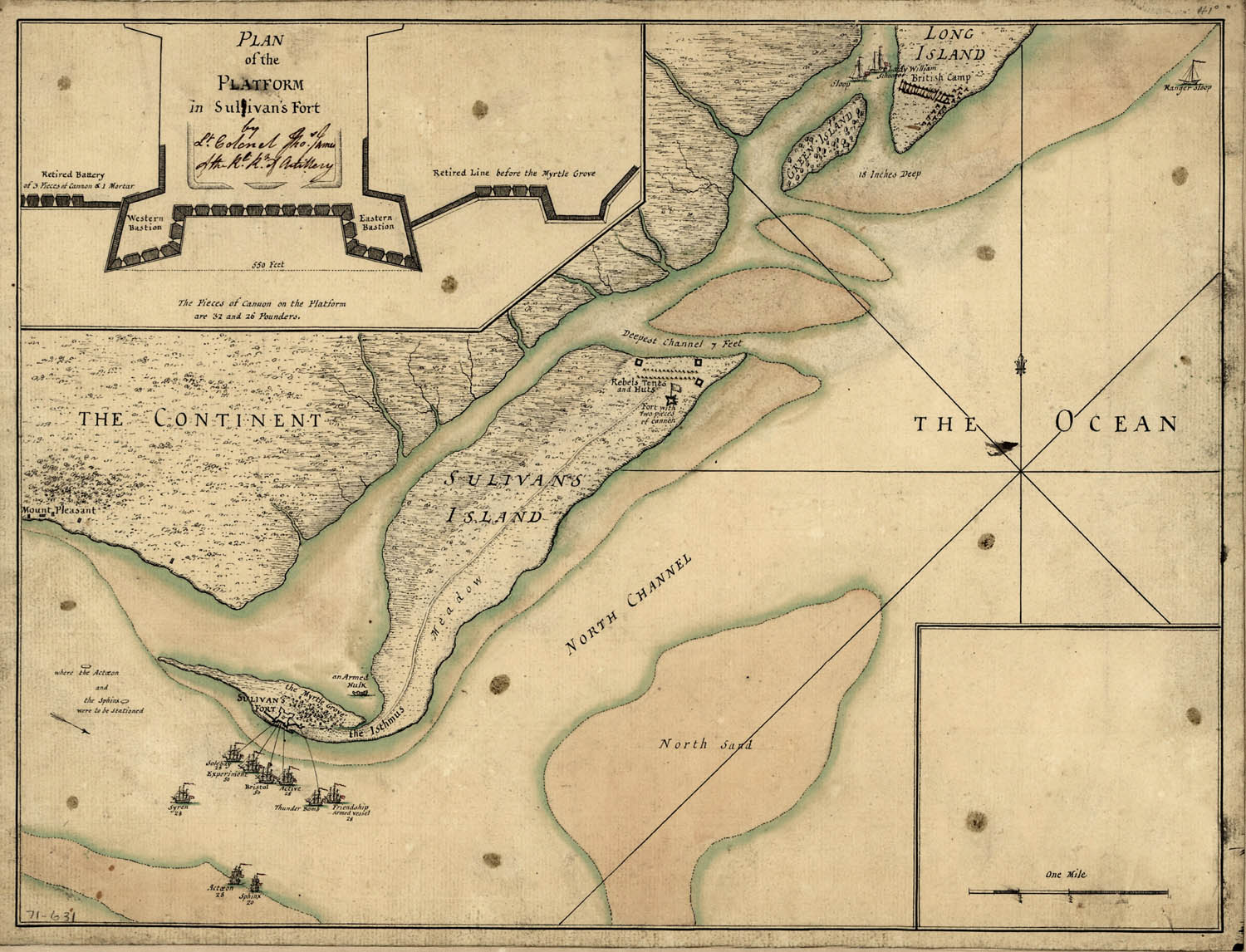
1707–1799
Quarantine Island
Pest houses on Sullivan’s Island quarantined arriving passengers, including captive Africans carried through Charleston’s slave trade.
June 28, 1776
Battle of Sullivan’s Island
Colonial forces at the unfinished palmetto-log fort forced nine British warships to withdraw after a nine-hour battle.
1827–1828
Edgar Allan Poe
Poe served at Fort Moultrie under the name Edgar A. Perry and later used the island as the setting for “The Gold-Bug.”
1860–1865
Civil War
Fort Moultrie became part of the Confederate harbor defenses and was heavily affected by the long struggle for Charleston Harbor.
1890s–1947
Coastal Defense Era
New batteries and military infrastructure extended the island’s defense role until the Army ended active use after World War II.
Before the fort
The island was also a quarantine station in the transatlantic slave trade.
Between 1707 and 1799, four pest houses were built on Sullivan’s Island, never more than one at a time. The National Park Service says these quarantine stations were used when arriving passengers—including enslaved Africans—carried infectious disease.
Charleston was one of the principal entry points for captive Africans brought to British North America and the United States. Sullivan’s Island therefore became part of the forced passage into slavery for many people before they were taken into Charleston.
The Bench by the Road behind the Fort Moultrie Visitor Center commemorates people caught in that history and the lives changed or lost through the Middle Passage.
June 28, 1776
The palmetto fort turned the island into a Revolutionary landmark.
Colonel William Moultrie’s unfinished fort of palmetto logs and sand guarded the entrance to Charleston Harbor. On June 28, 1776, nine British warships attacked. After roughly nine hours, the fleet withdrew.
The fort’s yielding palmetto-and-sand construction absorbed British fire unusually well. The victory prevented the immediate occupation of Charleston and became one of the defining early military successes of the Revolution in the South.
Battle of Sullivan’s IslandPalmetto Logs
The original fort used local palmetto logs with sand packed between its walls—materials that absorbed shot rather than shattering like harder masonry.
Moultrie Flag
William Moultrie’s dark blue regimental flag with a white crescent became one of South Carolina’s enduring Revolutionary symbols.
Fort Moultrie
The first fort was later named for its commander. Rebuilt versions of Fort Moultrie continued guarding Charleston Harbor into the 20th century.
Carolina Day
South Carolina has long commemorated the June 28 victory as Carolina Day, connecting the modern island to the 1776 battle.
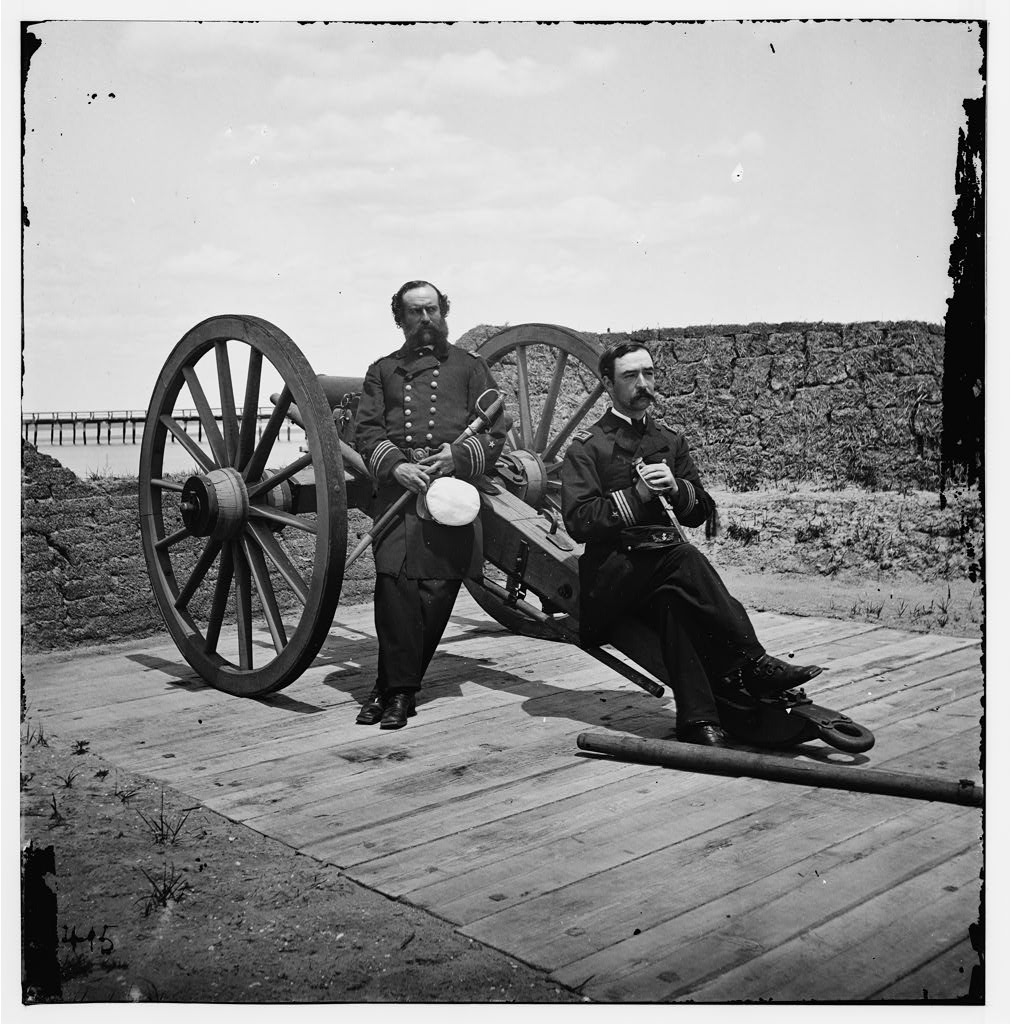
Civil War + coastal defense
Fort Moultrie tells more than one war story.
In December 1860, the U.S. garrison left Fort Moultrie for the stronger Fort Sumter. Confederate forces then occupied the Sullivan’s Island defenses, which became part of the long contest for Charleston Harbor.
The National Park Service has documented another part of that story: thousands of enslaved laborers were forced to work on Confederate fortifications around Sullivan’s Island, while records from 1863 and 1864 identify 248 people who escaped from island fortifications.
Military use continued long after the Civil War. New Endicott-era batteries and other defenses were built around the turn of the 20th century, and the Army’s active coastal-defense role on the island continued until 1947.
Underground Railroad & Fort MoultriePoe on Sullivan’s Island
A short military posting became part of American literary history.
Edgar Allan Poe served at Fort Moultrie in 1827 and 1828 under the name Edgar A. Perry. He later used Sullivan’s Island as the setting for “The Gold-Bug,” tying the island to one of the best-known writers of the 19th century.
The connection is visible today in an unusual place: the Edgar Allan Poe/Sullivan’s Island Library has occupied renovated Battery Gadsden since 1977. The Spanish-American War-era battery was built in 1903–1904 and is listed on the National Register of Historic Places.
Edgar Allan Poe / Sullivan’s Island Library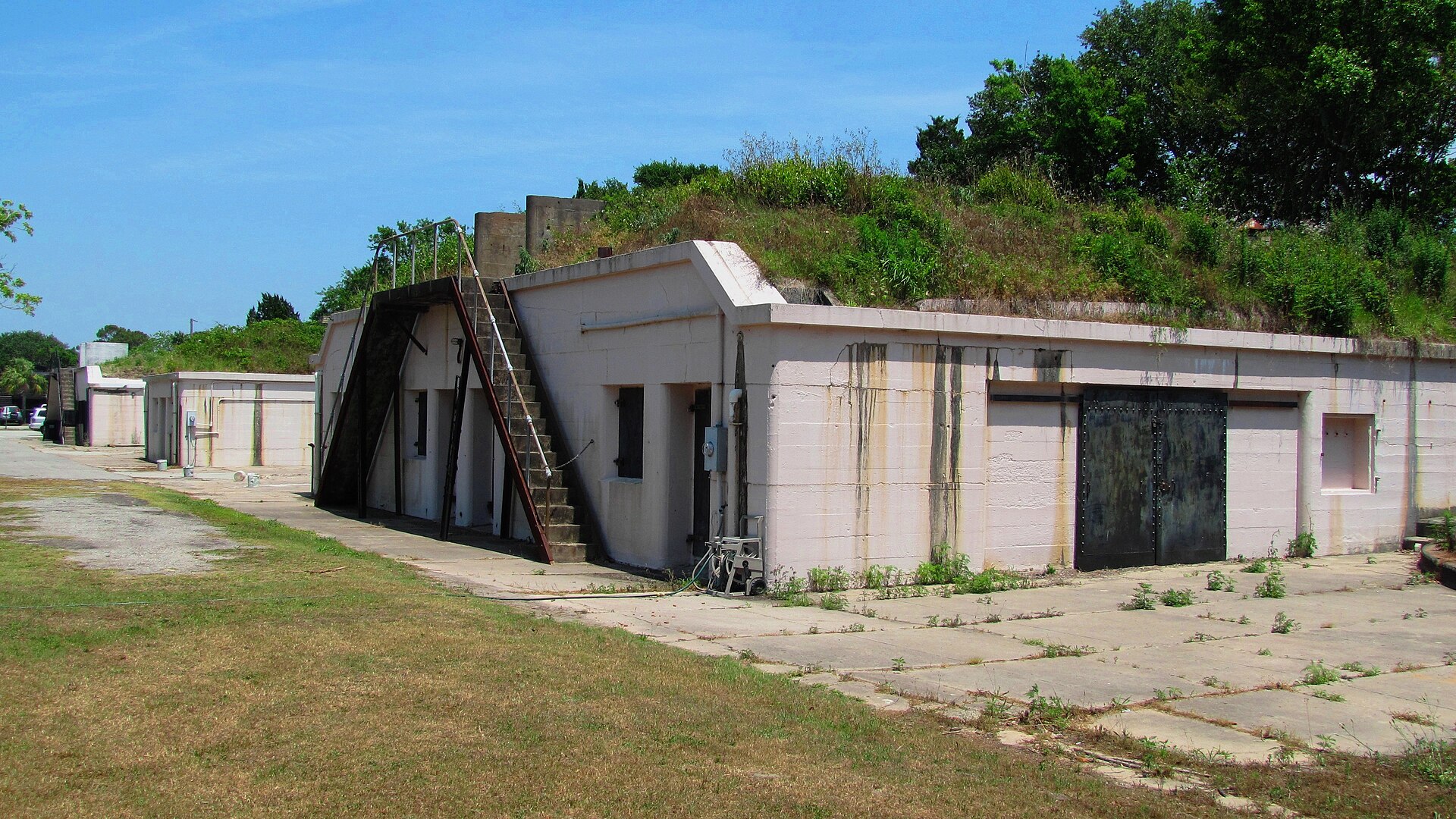
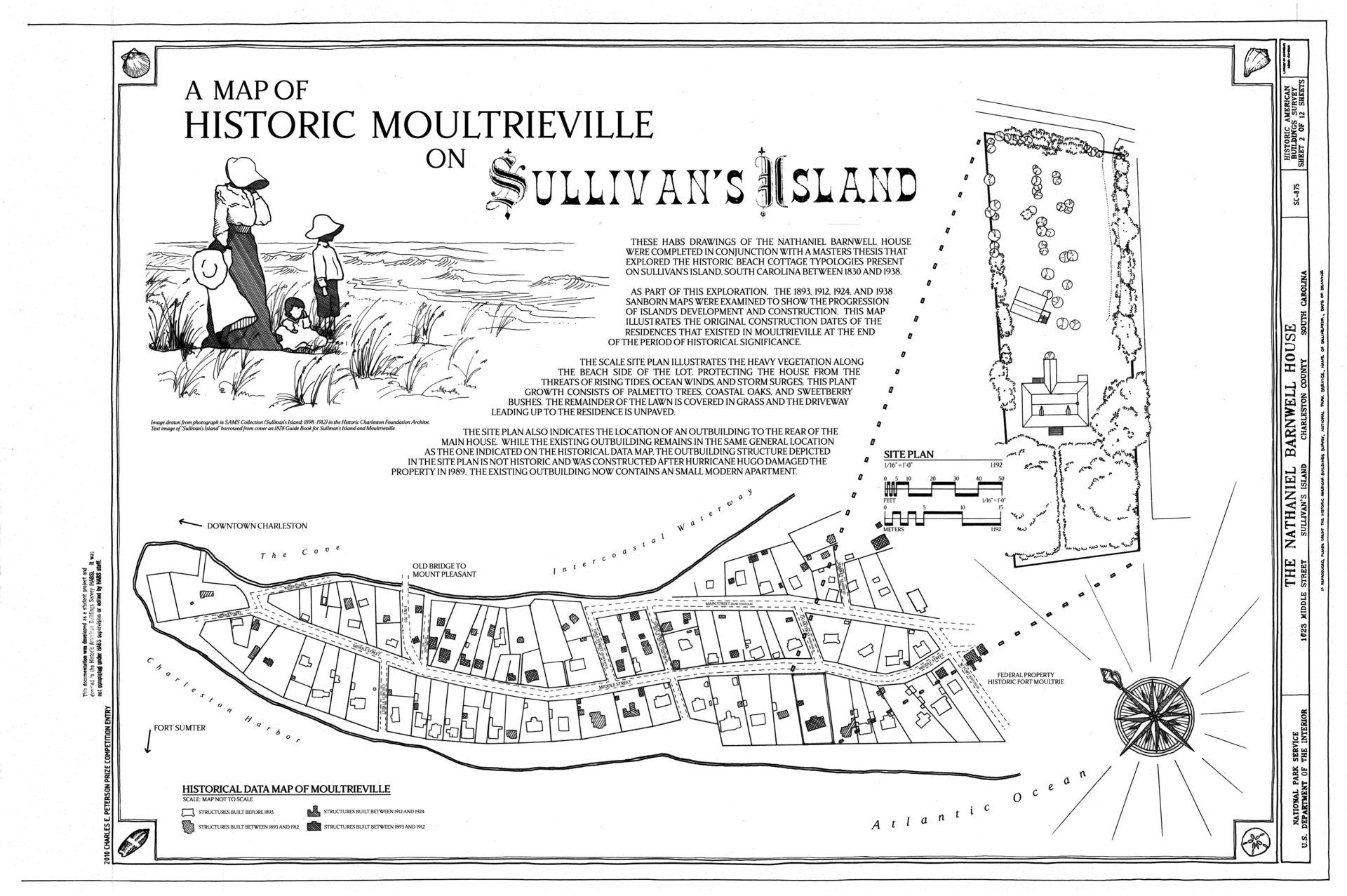
Moultrieville + island houses
The island became a summer refuge before it became a year-round residential town.
By the early 19th century, Charleston residents increasingly used Sullivan’s Island as a seasonal health retreat and summer community. The town of Moultrieville was incorporated in 1817, and simple wooden island houses developed around porches, breezes and the realities of a storm-exposed coast.
The National Register documentation for the Sullivan’s Island Historic District identifies surviving buildings that reflect military, island-house and religious traditions, with the district’s period of significance extending roughly from 1870 to 1950.
Storms repeatedly reshaped the community, while rebuilding and adaptation became part of the island’s architectural character. That tension between preservation and coastal change remains visible today.
Historic PreservationHistory you can still see
The island’s culture is unusually tied to surviving places.
Sullivan’s Island history is not confined to plaques. The fort, coastal batteries, historic houses, lighthouse, library and preserved landscapes make the island’s different eras physically visible.
Fort Moultrie
Walk through restored sections representing multiple eras of American coastal defense.
Battery Gadsden
A former artillery battery adapted into the island’s public library—a direct example of military infrastructure becoming civic space.
Historic Districts
Moultrieville and other historic resources preserve the island-house architecture that developed alongside beach and resort life.
Charleston Light
The modern lighthouse and surrounding Coast Guard resources mark the island’s continued role at the entrance to Charleston Harbor.
See the history in place
Use the island itself as the next chapter.
The Things to Do guide connects Fort Moultrie, Battery Gadsden, Charleston Light, the beach and other historic stops into a practical visit.